
Frank Lloyd Wright architecture
Frank Lloyd Wright was the American architect who built the organic house and the prairie form, and his architecture is the style that carries the horizontal line and the low roof and the open plan into the 20th century. Born in 1867 and working until his death in 1959, Wright designed more than 1,000 buildings over a career of 70 years, and the 2 styles that carry his name are the prairie style of the early work and the organic architecture of the later. The prairie style is the house of the Midwestern flat, the low mass and the band window and the deep eave, and the organic architecture is the building that grows from the site and the use, the form that the place and the life set, and the 2 together are the architecture Wright built, the style that made the American house a design object.
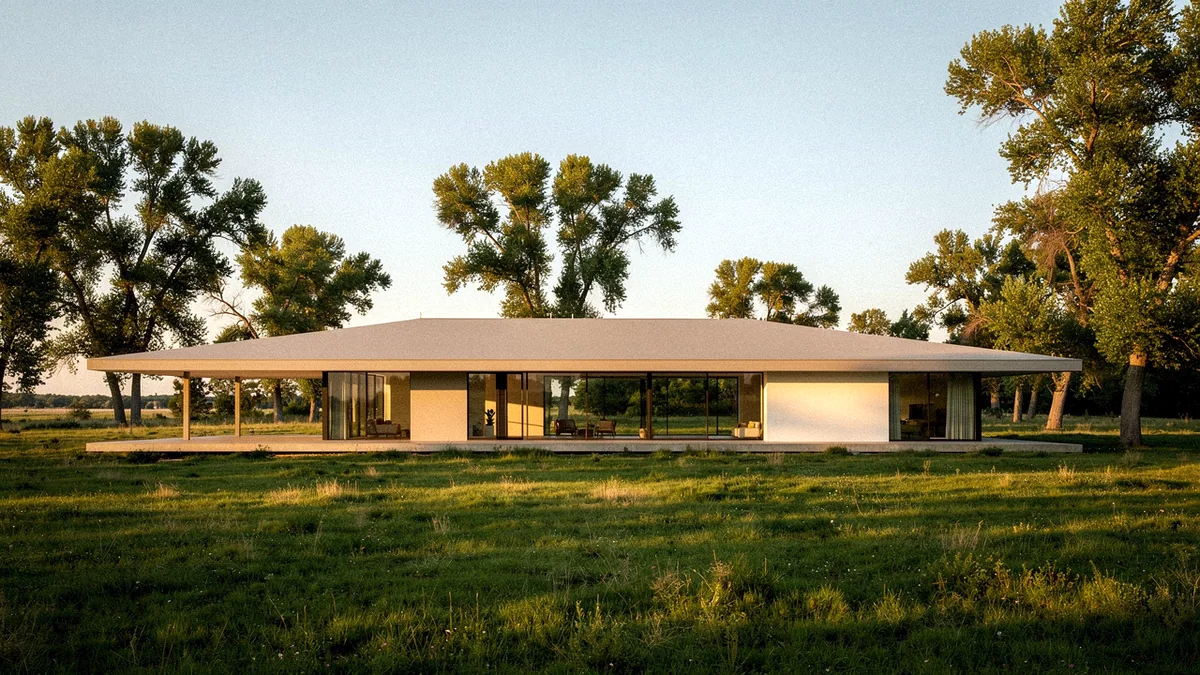
The prairie style Wright built
The prairie style is the architecture Wright built in the early career, and it is the style of the Midwestern house that carries the horizontal line. The 4 features the prairie style sets are the low roof, the deep eave, the band window and the open plan, and they are the things that name the prairie house on the street. The low roof is the hip or the flat that sits the house low to the ground, the roof that echoes the flat of the prairie it stands on. The deep eave is the overhang that shades the wall and grounds the mass, the eave that the prairie house carries wider than the house before it. The band window is the long horizontal row that lights the open plan, the window that the prairie house runs across the facade instead of the single square. The open plan is the interior that the band window lights, the room that flows without the wall the Victorian house carried, and it is the plan the prairie house made the American home. The 4 features are the prairie style, and the house that carries them is the prairie house, the style Wright built in the 1900 and 1910 years, the Robie House in Chicago being the example the style is named by, the prairie architecture that set the horizontal house as the form the Midwest built.
The organic architecture of the later work
The organic architecture is the style Wright built in the later career, and it is the building that grows from the site and the use rather than the style book. The 3 principles the organic architecture works to are the site, the material and the plan, and they are the things that set the building to the place it stands in. The site is the first principle, the ground and the light and the view that the building answers, the form that the place sets rather than the style the book gives, and it is the principle the Fallingwater carries, the house that Wright set over the fall in Pennsylvania so the building grew from the rock and the water it sat on. The material is the second, the substance the building is made of carried to the surface, the stone and the concrete and the wood that the building shows rather than hides, and it is the principle that the organic house works in, the material that the site gives made the skin of the building. The plan is the third, the interior that the use sets, the room that the life of the house orders rather than the style the period names, and it is the principle the organic plan works to, the space that the life makes rather than the plan the book gives. The 3 principles, the site, the material and the plan, are the organic architecture, and they are the style Wright built in the later career, the building that grows from the place and the life, the organic form that the site and the use set.
The buildings that carry the name
The buildings that carry the name of the Frank Lloyd Wright architecture are the 3 that the style is read by, and they are the Robie House, the Fallingwater and the Guggenheim Museum in New York. The Robie House in Chicago is the prairie house, the 1910 design that the prairie style is named by, the low mass and the band window and the deep eave that the style sets, and it is the building the early work is read by. The Fallingwater in Pennsylvania is the organic house, the 1935 design that Wright set over the fall, the house that the organic architecture is named by, the concrete and the glass and the stone that grew from the rock and the water, and it is the building the later residential work is read by. The Guggenheim Museum in New York is the organic public building, the 1959 design that Wright set as the continuous ramp, the museum that the spiral carries the visitor up through the gallery, and it is the building the public work is read by, the form the site and the use set as the continuous curve. The 3 buildings, the Robie House, the Fallingwater and the Guggenheim, are the architecture Wright built that the style is read by, the prairie house and the organic house and the organic public building, the 3 that carry the name from the early prairie to the later organic.
How the style reached the house
The way the Frank Lloyd Wright style reached the house is the 2 moves that carried the prairie and the organic from the designed house to the built home, and they are the plan and the material. The plan is the first move, the open plan that the prairie house set, the room that flows without the wall, and it is the move the American house took, the open living and dining that the mid century home carried from the prairie plan, the interior that the Wright house made the form the suburb built. The material is the second move, the honest material that the organic house set, the wood and the stone and the concrete carried to the surface, and it is the move the house took, the material that the site gives made the finish, the skin that the organic architecture made the home wear. The 2 moves, the plan and the material, are how the style reached the house, and they are the things the Wright architecture gave the American home, the open plan and the honest material, the 2 that the prairie and the organic set and the built home took, the style that made the house a design object and the form the home still builds in.
Where the style sits in the history
The place of the Frank Lloyd Wright architecture in the history of the style is the bridge between the Victorian house and the modern, and it is the position the prairie and the organic hold in the line of the American building. The style before Wright was the Victorian, the ornament and the bay and the steep roof that the 19th century house carried, and the style after was the modern, the plain wall and the flat roof and the glass that the 20th century movement set. Wright built between the 2, the prairie that took the horizontal from the prairie and the open from the plan, and the organic that took the form from the site and the material from the ground, and the 2 together are the bridge the American house crossed from the Victorian ornament to the modern plain. The style sits in the history as the American answer to the modern, the form that grew from the prairie and the site rather than the book, and it is the position the Wright architecture holds in the line of the style, the bridge that the house crossed, the prairie and the organic that set the American house as the design object the modern then carried forward.