
AI in architecture
AI in architecture is the use of machine learning and generative software to do part of the work of the discipline of architecture, and it now touches 3 distinct stages of a project, the generation of design options, the rendering of the finished building, and the checking of the model against rules. It is a tool that the architect still directs, and the 2 questions that follow from that, what an AI can do for a building and whether it can replace the architect, are answered differently depending on which of those 3 stages you mean. This page maps the tools, the rendering workflow, and the realistic limits.
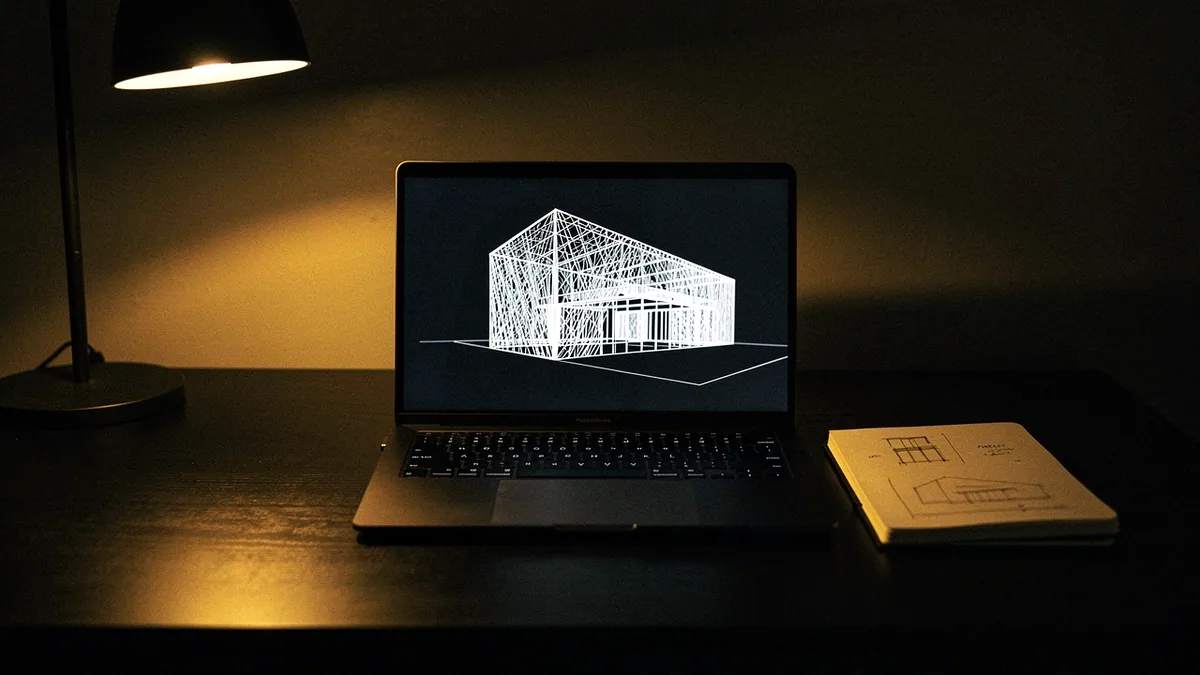
The AI tools that generate design
The AI tools that generate design in architecture are the programs that turn a set of conditions into a batch of possible building forms, and they are the newest of the 3 stages. A generative model is trained on a library of building drawings and can return a set of massing options in minutes, where a designer would have drawn 3 or 4 by hand in the same time. The tools that sit inside a building information modeling file take the model of the building and flag clashes, a pipe through a beam or a door that does not swing clear, which is a check that a human reviews one at a time. The output is a set of options for the architect to choose between, and the value is in the breadth, because the AI in architecture can test a hundred directions before the human picks the one to develop. The Building information modeling page of this site is where that model lives, and the generation tools read from it.
The rendering workflow
The rendering workflow in architecture is the stage where a model of the building becomes an image that a client can read, and it is the use of AI that is most visible to a non specialist. A traditional render is computed by a renderer such as those in the major visualization packages, and a single frame of a realistic interior can take hours of computing. The AI image models that arrived in the early 2020s turn a simple sketch or a rough 3D block into a photorealistic view in seconds, and the 2 techniques are now used together, the 3D model giving the correct geometry and the AI giving the light, the material and the finish. The workflow is the same in most firms, a block model is drawn, an AI render is generated from it, and the architect adjusts the prompt until the image matches the design intent, so the rendering is a conversation between the model and the machine.
Whether AI can replace the architect
Whether AI can replace the architect is a yes and no question, and the answer is no for the role and yes for parts of the work. The AI in architecture takes over the repetitive parts, the drafting of the repetitive details, the first pass of the render, and the checking of the model, and those are real hours on every project. It does not take over the part that is the discipline, which is deciding what a building should be for the people who use it, reading the site, and answering for the building when it is built. The license to sign a drawing in most places is held by a human, and the responsibility for the safety of the building does not transfer to a machine. So the question of whether the architect is taken over by the AI is best read as a change in the share of the work, not a replacement of the person, and the buildings that the AI helps make are still signed by the architect whose name is on them.
The realistic limits of the technology
The realistic limits of the technology in architecture are the places where the AI output is still wrong, and they are the same places a careful reader should watch. The generated images are not to scale and do not obey the physics of the building, so a rendered room can show a ceiling that a structure could not carry. The generative forms are novel but not yet engineered, and a building massing that looks good in an image may not stand up to the wind or the code. The model checking is only as good as the rules it is given, and a rule that is missing is a clash that is not found. The discipline of architecture is the one that closes those gaps, because the AI proposes and the architect disposes, and the limit is that the machine optimizes for what it was trained on, not for the client in front of it. The Architecture in Lego page of this site shows the same point at small scale, where a model of a building teaches the structure that the AI only imitates, and the deeper meaning of the work is in the What Architecture Design Actually Means page, which is the judgment that no tool signs for the designer.
The AI in architecture is a tool that has changed the speed of the 3 stages of a project, and it is not a replacement for the discipline. It generates, it renders, and it checks, and the architect decides, and that division is where the practice stands today.