
Best Architecture in the World
The best architecture in the world is the body of buildings that has stood the test of time and of use, and it is a set that runs from the Pantheon in Rome, completed in 126, to the Burj Khalifa in Dubai, the 828 metre tower finished in 2009. These are the buildings that are still talked about a century or more after they were built, and they are the reference points against which new work in the discipline of architecture is judged. This page profiles the landmarks that define that set, the styles they represent, and the problems they set out to solve.
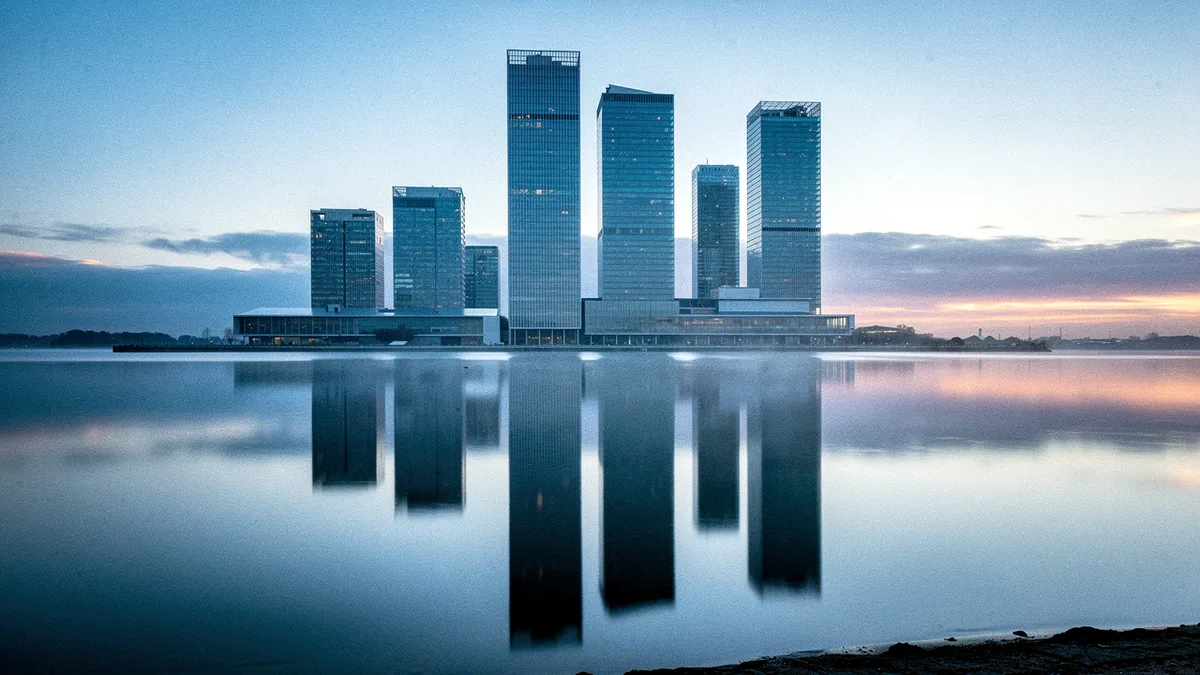
The list is not a ranking, because the buildings serve different purposes and different eras, but it is a map of the discipline's high points, and it is the set that a reader looking for the best architecture in the world will recognize.
The landmark buildings that define the set
The landmark buildings that define the best architecture in the world are chosen by 3 tests: they are still standing and in use, they are still talked about, and they solved a real problem in a way that changed the discipline. The table gives the building, the city, the architect where it is known, the year, and the quality that put it on the list.
| Building | City | Architect | Year | Quality |
|---|---|---|---|---|
| Pantheon | Rome | not recorded | 126 | The largest unreinforced concrete dome |
| Colosseum | Rome | not recorded | AD 80 | Concrete vaults for 50,000 spectators |
| Sagrada Familia | Barcelona | Antoni Gaudi | since 1882 | A church as a sculptural structure |
| Eiffel Tower | Paris | Gustave Eiffel | 1889 | An iron lattice that became a symbol |
| Sydney Opera House | Sydney | Jorn Utzon | 1973 | A shell form that is the city's sign |
| Guggenheim Museum Bilbao | Bilbao | Frank Gehry | 1997 | Curved titanium that renewed a city |
| Burj Khalifa | Dubai | Adrian Smith, SOM | 2010 | The tallest building at 828 m |
What these 7 share is that the form of each one is doing the work of the idea. Each can be described in a single sentence about how it looks and how it solves its problem, and that is the test that separates the landmark from the ordinary building. A landmark is the building that the city is known for, and the set of landmarks is the visible history of the discipline.
The architectural styles from around the world
The best architecture in the world comes from every region, and the styles that define it show how the discipline adapts to the climate, the materials and the culture of the place. The Western tradition runs from the classical orders of Greece and Rome through the Gothic cathedral, the Renaissance palazzo and the modern movement. The Islamic tradition gives the horseshoe arch and the geometric tile work of the Alhambra in Granada. The East Asian tradition gives the timber bracket and the curved roof of the temple. Each tradition answers the same problem, how to make a building that is sound, sheltered and meaningful, with the materials and the skills of its own place, and that is why the best architecture in the world is a global set and not a single school. The styles are set out in the Architecture styles section of this site, and the landmark list is the set of buildings that each style produced at its best.
The problems these buildings solved
The buildings on the list are remembered because they solved a hard problem, and the problem is the real subject of the architecture. The Pantheon solved the problem of spanning a huge space with a single dome of concrete, a structure that had not been done before and that has not been topped. The Colosseum solved the problem of seating 50,000 people and moving them in and out in minutes, using a system of numbered arches. The Sydney Opera House solved the problem of giving a city a performance hall with a form that could be seen from the sea. The Burj Khalifa solved the problem of building the tallest structure in the world, which is a problem of wind, of concrete and of the elevator that must climb 163 floors. In each case the problem is the point, and the building is the solution made visible. The history of the discipline is a history of these problems being solved, and the landmark is the solution that outlasted its moment.
The sustainable problems the discipline now faces
The best architecture in the world now faces a problem it has not had before, which is the problem of building in a climate that is changing. Buildings account for roughly 40 percent of global energy use, and the discipline's answer is the sustainable design of the building envelope, the orientation of the openings and the choice of low carbon materials. The new landmarks will be judged not only by how they look and how they solve their use, but by how little energy they burn and how little carbon they put into the air over their life, which is decades. The buildings that will stand on the list in another century are the ones that solve the problem of the building and the problem of the climate at once, and that is the test that the discipline is now being measured against.
The best architecture in the world is, in the end, the set of buildings that did their job well and outlasted the time they were built in. It is a global set, it spans 2,000 years, and it is the visible record of the discipline of architecture doing what it is for.